Facilitate Adoption. Anchor Change.
The success of a transformation project isn’t just about tools or plans—it’s about how teams experience the change. We help you identify invisible barriers, mobilize key stakeholders, and secure collective buy-in for sustainable and smooth transformations.
Our Change Management Methodology
Achieving sustainable transformation requires more than a one-size-fits-all approach: it demands proven methods combined with active listening, creativity, and individual commitment.
Our approach integrates best practices from research and field experience: we combine leading change management models (Hérbemont & César, Kotter, ADKAR, Pareto) with proven communication methods (Transactional Analysis, Communication Objectification) to structure each phase, engage all stakeholders, and ensure both individual and collective adoption.
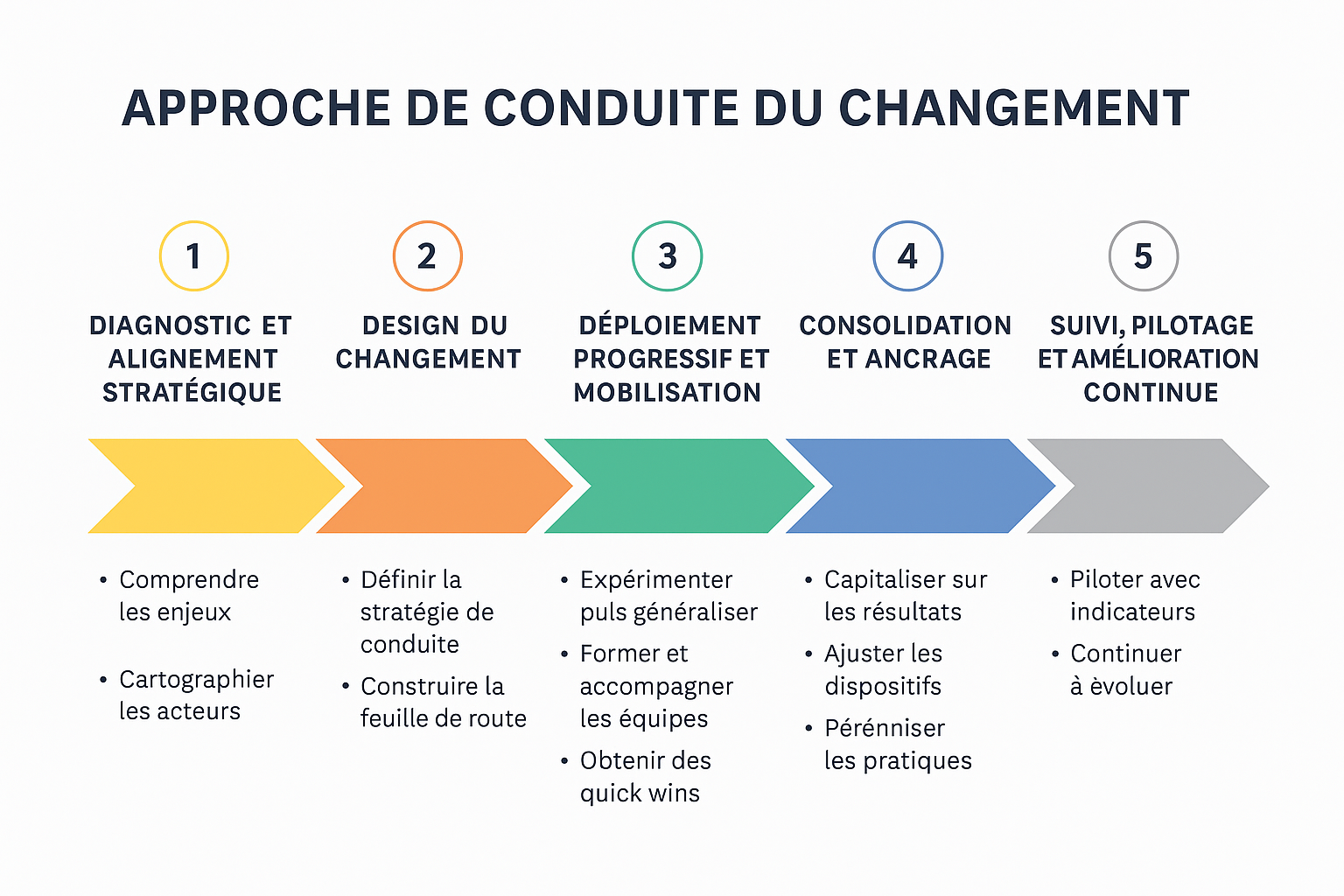
This progressive, structured, and human-centered approach effectively guides change from initial analysis through to embedding new practices, while fostering creativity and collective problem-solving.
(M-1) Diagnostic survey, field workshops, network contribution, vision development
(1-3 MONTHS) Pilot project initiation, support, engagement/onboarding
(3-6 MONTHS) Testing, adjustments, consolidation
(6+ MONTHS) Best practices dissemination, sustainable integration
- Create a sense of urgency
- Identify key stakeholders and influence networks
- Generate awareness
- Prioritize high-impact levers (20%)
- Objectify hidden tensions
- Track adoption metrics and adjust actions
- Reduce low-value efforts
- Maintain effective relationship dynamics
- Use triangulated frameworks to manage complexity and structure feedback